

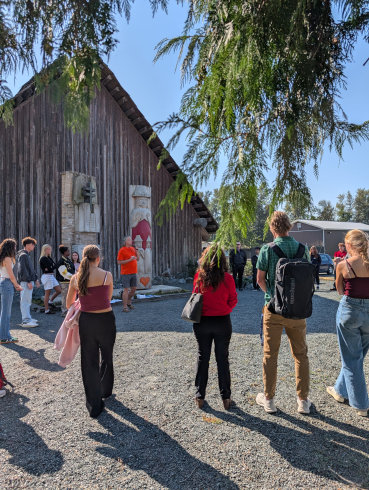
June is National Indigenous History Month
June 11, 2026
June is National Indigenous History Month in Canada, an opportunity to learn about the unique cultures, traditions and experiences of First Nations, Inuit and Métis who have lived on this land since time immemorial and whose presence continues to shape Canada today. It is also a moment for reflection and to recognize the ongoing impacts of colonization and to reflect on how we can all contribute to reconciliation.
The campaign dates back to 2009, when the House of Commons designated June as National Aboriginal History Month. The name was changed to National Indigenous History Month in 2017.
At the Chilliwack School District, our purpose is Honouring, Shaping and Inspiring our Past, Present and Future. We value the histories, cultures, and contributions of all who came before us. Together, we support every learner’s journey by building connected, caring communities. We empower curious, courageous, and compassionate learners who have the knowledge and skills to contribute to a changing world. We’re committed to Truth and Reconciliation, lifelong learning, and shared responsibility for the future.
Our generational stewardship lens, Tómiyeqw, asks us to look to the future and to the past. The Coast Salish philosophy behind Tómiyeqw guides people to think deeply about any action, or inaction, they take. Tómiyeqw expresses the responsibility and connection Stó:lō people have to the seven generations past and future. Tómiyeqw is a Halq'eméylem term that literally means both great-great-great-great grandparent/aunt/uncle and great-great-great-great grandchild/niece/nephew. It reminds us to think beyond our own lifetimes and act with care for future generations.
Mental health support available
This page contains topics that may be distressing to some readers. If you need help, please note that there are Indigenous mental health services available.
How to get involved
We encourage you to take some time to learn more about First Nations, Inuit and Métis as well as our collective past. Here are a few ideas of how you can get involved and show your support.
Discover stories, traditions and cultures
The best way to gain a deeper understanding of First Nations, Inuit and Métis experiences is through their own voices: read books by Indigenous authors; attend events and community gatherings; watch films or performances; listen to music by Indigenous artists, and follow First Nations, Inuit and Métis creators on social media.
National Indigenous Peoples Day is an important time to honour Indigenous cultures. Around June 21, First Nations, Inuit and Métis communities across Canada mark the occasion by hosting events such as festivals, cultural performances, ceremonies and community gatherings.
Sharing the Journey is a video series that features First Nations, Inuit and Métis storytellers sharing their personal stories of culture, resilience, and hope. Their unique perspectives offer a chance to reflect on Canada's past and what reconciliation means today.
Learn about the past and how it shapes the present
Understanding the history of colonization helps explain many of today's realities.
Visit the National Centre for Truth and Reconciliation to learn about Canada's Residential School System.
Learn about the Coqualeetza Cultural Education Centre.
Read the findings from the National Inquiry on Missing and Murdered Indigenous Women and Girls.
Find out about treaties with Indigenous Peoples.
Download the Reconciliation: A Starting Point app to learn about key historical events and reconciliation initiatives.
Discover related content by exploring learning resources about First Nations, Inuit and Métis across Canada.
Learn more about present-day communities
National Indigenous History Month is not only a time to reflect on the past, but also an opportunity to learn about and celebrate the Indigenous communities and cultures across Canada.
Visit the Map Room to discover interactive maps and learn more about the regions and places around you.
Explore Statistics on Indigenous peoples from Statistics Canada.
Check out UN Declaration in Action stories to learn about projects that support the United Nations Declaration on the Rights of Indigenous Peoples Act and Action Plan.
Learn about Indigenous language programs and revitalization efforts through the Office of the Commissioner of Indigenous Languages.