

From Professional Development to Daily Practice: Literacy Strategies for Middle Schools
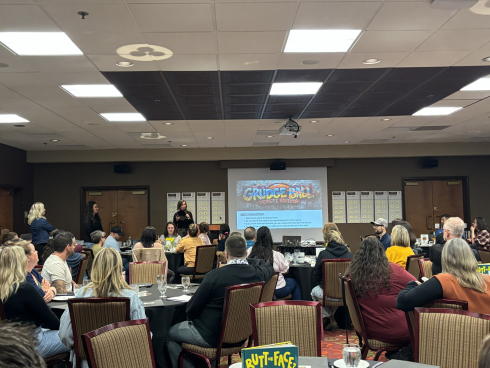
An important part of sustaining strong student literacy is continuing to build on the expertise and confidence teachers already bring to the classroom. In the fall, the Chilliwack School District hosted two days of professional development for 70 middle school teachers. The middle school literacy retreat was designed to align the work that’s happening in Chilliwack schools with the District’s Literacy Framework.
Literacy is priority in the Chilliwack School District’s strategic plan. It is a foundation for learning. With strong literacy, students can access knowledge, express ideas, think critically, and communicate.
At the fall retreat, the curriculum team led two days focused on literacy practices that support reading, evidence-based instruction, collaboration, and Indigenous perspectives and world views.
“When we’re able to bring 70 teachers together to hear the same message, that’s powerful. Teachers were engaged and excited,” said Assistant Superintendent Dr. Kirk Savage. “They went away with the confidence to use new strategies. It was the kind of lesson you could learn today and try tomorrow.”
One strategy shared at the retreat was about front-loading difficult words in non-fiction. When a student explores a challenging word before reading it in a piece of non-fiction, understanding becomes easier.
Take the word, decomposition. Breaking the word into its smaller parts – de (down, away, or undoing), compose (to put together or make up), and tion (the act of) - helps students make meaning. It literally means “the act of coming apart”.
Students can use what they learn about word parts to make predictions about a text they’re about to read. They can also use the word in their own writing. By the time they read the word in a piece of non-fiction, it’s less likely to be a barrier. This can be especially helpful for non-fiction, which often includes challenging and specialized words.
A Grade 6 teacher shared their reflections with the presenters: “This was a fantastic Pro D - the best I have had in literal years. I have stuff I can do in class immediately, fantastic resources for long term, and it was delivered by talented and super kind folk.”
Since the retreat, teachers from all six middle schools have continued to work with the curriculum department to engage in further learning. They are using what they learned in their schools.
“Teachers from Vedder Middle School who attended the retreat are now collaborating to integrate the literacy strategies with colleagues in science and social studies. The team continues to meet regularly to share strategies, reflect on implementation, and celebrate successful practices,” said Shawna Petersen, District Principal for Assessment and Instruction.
“This is timely work because our achievement at middle school has not reflected the same success that we’ve had at elementary. When comparing our literacy assessment data to the rest of B.C., we see encouraging results. Grade 4 results in Chilliwack exceed provincial averages. However, at Grade 7, we dip below the provincial average. This tells us we're providing a strong foundation in early literacy and need to grow our practices into the middle years," said Dr. Savage.
To that end, the curriculum team is focusing support on middle schools this school year. The District will continue to monitor results and anticipates that the work done now will help close the gap for future students.